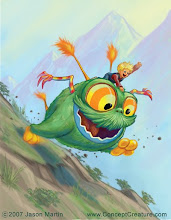
For every non-art person that marries an artist, I think there's something that's very important to keep in mind: your spouse is cheating on you. And no, not in an actual physical, sexual way, a la any member of Congress, but in the occasional spiritual way. Every passionate artist is always married to two people: their spouse, and their muse.
The spouse of an artist is the one that, hopefully, married them because they appreciate all aspects of their artist hubbie/wife, including that they expose the non-artist spouse to a different side of culture that you'd probably not be aware of, otherwise. This includes all the eccentric artist friends, the strange exhibits/events that they are involved in, as well as the biggest factor: that their attention and passion isn't always directed towards their non-artist spouse.
This last factor is probably the biggest point of contention with spouses of artists, and understandably so. I've been getting more and more into film production lately, and you can only imagine the baffled look on my wife's face when I told her my film buddies and I are going to be filming a short comedic skit on the weekend about a jogger that gets stalked by a duck. It's a clever and quirky script (I think...), but to a merchandise analyst for a Fortune 500 company that got a Finance degree, you can only imagine how random and strange this notion is, especially when it means there is time taken away from her. These flights of fancy are met with confusion, and sometimes betrayal, because they realize--you've been seeing HER again, haven't you? That MUSE of yours! I thought I sensed her visit the other night, when you were typing madly until 2 am on your computer!
But that's just how creatives think. It's especially how we think, when the 9-to-5 job is working at a printing shop making brochures for church and school functions, or doing page layout for textbooks, or cranking out blase' signage for strip mall shops, or anything else that's cut-and-dry and not very creatively-motivating. Sure, our bodies are there earning a living, but our minds are already thinking about the next piece of canvas we're going to go to town on that night. When we're done having dinner, put the kid to bed...we then get to hang out with the muse.
I appreciate having such a polar opposite for a spouse. In fact, I highly recommend that very imaginative artists HAVE a more conservative spouse, because it just really helps keep you grounded with your dreams and ambitions. In my case, I want to do it all--animation, gaming, film, children's book publishing, comic books. I have my fingers in all of it. My wife, however, brings a good sense of pragmatism to the flights of "inspiration" that I have, and has been a very good rudder for my after-hours ambitions, as she has a very different point of view that's more focused on the big picture. Many a time, when I suddenly talk about how fascinating Chinese calligraphy is, and how I should go invest in a fifty dollar brush and ink set, she's very useful at putting things in a better perspective:
"Wait, Jason, what happened to that comic book you started? You got five pages into it, are you done with that project yet?"
"Did you ever wrap up that children's book and submit it to that agent? You know you have an open invitation from her, and that's what you're mostly interested in pursuing, so don't get sidetracked!"
"Whoa, hold on! You've got a week before that deadline on that freelance project! Are you done with that, yet? That check would definitely help us get ahead on that student loan you wanted to pay off!"
These are the best types of critical remarks from non-artist spouses, for they're not discouraging of what I'm doing, but just trying to keep me focused on main priorities with my career that helps move me forward, instead of just aimlessly floating off to the next shiny object in my view port.
If I married another artist, they'd either be just as distracted as I was, or just encourage every ridiculous notion that I had. Can you imagine?
"Honey, I was thinking about recording the sounds of hummingbirds."
"Well," my flighty artsy wife would declare, "you have to go catch them, first! Here, take this giant net, mating whistle, and hummingbird costume, and go!" My god, I'd get NOTHING constructive done!
Most importantly, spouses of artists need to understand that they'll always be competing with the muse for attention. If you love the artist you married, you definitely need to give them space to thrive in that facility. You knew about this aspect of them before getting married to them, and you have to remember to love and accept this aspect, after getting married to them. It is, however, a delicate line that needs to be balanced. Artists, by their very nature, can get self-absorbed, and it's just as important for the artist spouse to be sensitive to their non-artist spouses' needs, as much as they are about the needs of the artist. This means making sure that chores are done in the house before art is finished, not missing big dates like anniversaries because you're busy working on a new song, perhaps not doing every gallery opening since you had already made plans to hang out with another couple this coming weekend, or if you do drag your non-art spouse to the art opening, not spending all night there like you typically do. If you really lack self-control, you might even need to set an alarm to let you know when you need to walk away from a guilty pleasure project, and make time for your loved one.
In life, there is harmony in balance. Such is the case with the married artist, as well. There's great spiritual fulfillment with your art, but there's a whole lot more spiritual growth that you benefit from, spending time with your loved ones, too.
Showing posts with label advice. Show all posts
Showing posts with label advice. Show all posts
Monday, June 13, 2011

Monday, March 21, 2011
So Ya Wanna Be An Art Intern!
I just got to hire my first intern for my department at work a few weeks ago! That was exciting! However, going through the slush of blah artists made it less exciting, but dealing with the people that couldn't follow instructions was infuriating.
I made very straightforward instructions: give me your resume', five of your best art samples, a link to your website, and send it to my specific e-mail address. People couldn't even follow those instructions. I'd get two samples of art instead of five, they'd go check out our website, and instead of the e-mails coming directly to me, as instructed, they'd just sent it through the company, meaning my boss would get inundated by e-mails HE didn't want to deal with (that's why he hired me!) and even when I said I was looking for local artists, I'd still get the random e-mail from Spain, asking if it's okay if he/she would apply.
So, in an attempt to REALLY CLARIFY what potential art applicants should and shouldn't do, here's a quick, concise list for any aspiring artist to follow. (Psst! A lot of these rules apply to ANY job applicant, too, so don't bail it you're not the artsy kind!)
RULE 1: I'M NOT LOOKING TO HIRE A COPYING MACHINE. Oh, look, here's several pictures in your portfolio that are either a few filters on a professional photo or just you duplicating a well-shot photo of a current celebrity! Know how much I care about that? Not at all. I'm looking for ORIGINAL CONTENT. I want to hire you as an artist to create art out of your head, not copy a pre-made photograph. If that's what I wanted, I'd just buy the stock photo.
RULE 2: DON'T JUST DO THE BARE MINIMUM. You can tell what assignments a class gets when you see a million of the same thing in the student portfolios from the same college. With 3-D at my old college, it was that old-fashioned Mr. Munch robotic penny bank for modeling, and then the standard bouncing ball and walk cycle for animations. With illustration, it was the acrylic animal eye and watercolor face portraits that was in EVERY portfolio. Obviously, if all you're turning in is what you were assigned to do for a grade, you're not showing that you have much ambition or imagination. So why would I expect you to give me either if I hired you?
RULE 3: FOLLOW INSTRUCTIONS. If I ask for a cover letter, a resume, a link to a website, five of your best illustrations, and a specific e-mail to send applications to, you better do every damn step EXACTLY how I told you to! If you can't get those instructions right, trying to teach you the complexities and intricacies of how our company is run is just going to annihilate you! Or worse--waste a lot of my spare time trying to hold your hand through the process. P.S. Have another person read your cover letter if spelling isn't your strong suit. If you can't expend the extra energy to spell-check or proof your own cover letter, the employer's going to interpret that you don't care enough to get the job.
RULE 4: BASIC ART PRINCIPLES. Don't send me half-finished artwork! Don't send me art that clearly isn't applicable to what we do! If you include a figure drawing, finish the hands, feet, and face! Unfinished art always sends the wrong message to the art director.
RULE 5: WALK THE WALK. Don't act like you know a program or are familiar with a process that you're not. Eventually you'll be put to task on this thing you don't know, and if it's on a tight deadline and you don't deliver, you've pretty much given yourself your own termination notice. Downplay your ignorance, but emphasize your ENTHUSIASM to learn more! Honesty is always the best policy, and if you show a basic knowledge of the principles, it might just be enough to encourage a boss to give you a chance.
RULE 6: DON'T CALL US, WE'LL CALL YOU. Did you send your contact information via e-mail, on the cover letter, and include it on the resume? Was the e-mail bounced back to you? If yes to the first question, and no to the second, okay, assume we've got your information and art. Don't e-mail me right after, asking if I got your stuff. Follow-ups can get REALLY annoying if you're a busy art director. Obviously, you get an interview, sure, do a follow-up. But silence from the company is usually the best critique you can get about the applicability of the art you submitted. NOTE: It doesn't necessarily mean you're a BAD artist, but perhaps that what you submitted doesn't fit the need of what we currently are looking for.
RULE 7: THE JOB INTERVIEW DOESN'T END WHEN YOU'RE PICKED. If you're hired as an intern, it's basically a litmus test to see if you're a good fit. Hiring an intern means, "Hey, we're willing to give you a shot here, professionally, for cheap, and perhaps if things work out, we MIGHT give you full-time employment!" So don't act like you can relax. The real test starts, the minute you start working there. Be punctual. Be respectful. Get to know people. Get those people to like who you are. But most importantly, work your ASS off. Interns are hired to do menial tasks that higher more experienced labor A) Doesn't WANT to do, and B) are way too knowledgeable on other aspects of the company to do such a menial task. As an intern given the petty jobs, MAKE SURE YOU DO THEM RIGHT. And with a smile on your face! If you can't get the coffee order right, or scan things properly, or put files in the correct folder, how will they ever trust you with larger responsibilities on a giant team project? In addition, if you mope and complain about every task I give you, what makes you think I'll be eager to continue collaborating with you? I know it seems like a common sense philosophy, but I've seen many a person dig their own grave with just their attitude, alone, when it came to getting a full-time position. I will gladly take a more personable yet less talented team player under my wing than a more talented prick. People are already complex and demanding enough. Please don't complicate that for any one!
So those are the big rules. I'm sure I'll add to this as I think of other things. But it's the big strokes, and if you follow these rules, you'll probably at least have a better head-start than most applicants do. Good luck, and most importantly, keep on drawing!!!!
I made very straightforward instructions: give me your resume', five of your best art samples, a link to your website, and send it to my specific e-mail address. People couldn't even follow those instructions. I'd get two samples of art instead of five, they'd go check out our website, and instead of the e-mails coming directly to me, as instructed, they'd just sent it through the company, meaning my boss would get inundated by e-mails HE didn't want to deal with (that's why he hired me!) and even when I said I was looking for local artists, I'd still get the random e-mail from Spain, asking if it's okay if he/she would apply.
So, in an attempt to REALLY CLARIFY what potential art applicants should and shouldn't do, here's a quick, concise list for any aspiring artist to follow. (Psst! A lot of these rules apply to ANY job applicant, too, so don't bail it you're not the artsy kind!)
RULE 1: I'M NOT LOOKING TO HIRE A COPYING MACHINE. Oh, look, here's several pictures in your portfolio that are either a few filters on a professional photo or just you duplicating a well-shot photo of a current celebrity! Know how much I care about that? Not at all. I'm looking for ORIGINAL CONTENT. I want to hire you as an artist to create art out of your head, not copy a pre-made photograph. If that's what I wanted, I'd just buy the stock photo.
RULE 2: DON'T JUST DO THE BARE MINIMUM. You can tell what assignments a class gets when you see a million of the same thing in the student portfolios from the same college. With 3-D at my old college, it was that old-fashioned Mr. Munch robotic penny bank for modeling, and then the standard bouncing ball and walk cycle for animations. With illustration, it was the acrylic animal eye and watercolor face portraits that was in EVERY portfolio. Obviously, if all you're turning in is what you were assigned to do for a grade, you're not showing that you have much ambition or imagination. So why would I expect you to give me either if I hired you?
RULE 3: FOLLOW INSTRUCTIONS. If I ask for a cover letter, a resume, a link to a website, five of your best illustrations, and a specific e-mail to send applications to, you better do every damn step EXACTLY how I told you to! If you can't get those instructions right, trying to teach you the complexities and intricacies of how our company is run is just going to annihilate you! Or worse--waste a lot of my spare time trying to hold your hand through the process. P.S. Have another person read your cover letter if spelling isn't your strong suit. If you can't expend the extra energy to spell-check or proof your own cover letter, the employer's going to interpret that you don't care enough to get the job.
RULE 4: BASIC ART PRINCIPLES. Don't send me half-finished artwork! Don't send me art that clearly isn't applicable to what we do! If you include a figure drawing, finish the hands, feet, and face! Unfinished art always sends the wrong message to the art director.
RULE 5: WALK THE WALK. Don't act like you know a program or are familiar with a process that you're not. Eventually you'll be put to task on this thing you don't know, and if it's on a tight deadline and you don't deliver, you've pretty much given yourself your own termination notice. Downplay your ignorance, but emphasize your ENTHUSIASM to learn more! Honesty is always the best policy, and if you show a basic knowledge of the principles, it might just be enough to encourage a boss to give you a chance.
RULE 6: DON'T CALL US, WE'LL CALL YOU. Did you send your contact information via e-mail, on the cover letter, and include it on the resume? Was the e-mail bounced back to you? If yes to the first question, and no to the second, okay, assume we've got your information and art. Don't e-mail me right after, asking if I got your stuff. Follow-ups can get REALLY annoying if you're a busy art director. Obviously, you get an interview, sure, do a follow-up. But silence from the company is usually the best critique you can get about the applicability of the art you submitted. NOTE: It doesn't necessarily mean you're a BAD artist, but perhaps that what you submitted doesn't fit the need of what we currently are looking for.
RULE 7: THE JOB INTERVIEW DOESN'T END WHEN YOU'RE PICKED. If you're hired as an intern, it's basically a litmus test to see if you're a good fit. Hiring an intern means, "Hey, we're willing to give you a shot here, professionally, for cheap, and perhaps if things work out, we MIGHT give you full-time employment!" So don't act like you can relax. The real test starts, the minute you start working there. Be punctual. Be respectful. Get to know people. Get those people to like who you are. But most importantly, work your ASS off. Interns are hired to do menial tasks that higher more experienced labor A) Doesn't WANT to do, and B) are way too knowledgeable on other aspects of the company to do such a menial task. As an intern given the petty jobs, MAKE SURE YOU DO THEM RIGHT. And with a smile on your face! If you can't get the coffee order right, or scan things properly, or put files in the correct folder, how will they ever trust you with larger responsibilities on a giant team project? In addition, if you mope and complain about every task I give you, what makes you think I'll be eager to continue collaborating with you? I know it seems like a common sense philosophy, but I've seen many a person dig their own grave with just their attitude, alone, when it came to getting a full-time position. I will gladly take a more personable yet less talented team player under my wing than a more talented prick. People are already complex and demanding enough. Please don't complicate that for any one!
So those are the big rules. I'm sure I'll add to this as I think of other things. But it's the big strokes, and if you follow these rules, you'll probably at least have a better head-start than most applicants do. Good luck, and most importantly, keep on drawing!!!!
Subscribe to:
Posts (Atom)